Scope: This guide applies to terminal-side and distributed coverage projects (CPE/routers/gateways, indoor DAS/iDAS systems, small coverage areas). Macro base station arrays and system-level site planning are outside the scope (macro categories are listed only to avoid classification errors). |
Most procurement errors stem from a classic mistake: people buy the label ("5G"), not the constraints (frequency bands, scenarios, radiation patterns, MIMO characteristics, cable losses). Once you convert the selection process into a short checklist, distractions disappear and risk drops rapidly. Ready to select with precision instead of guessing? |
This Guide Will Teach You: |
| • How to distinguish FR1 vs FR2 frequency bands (and why "5G" is not a technical specification) |
| • How to classify by deployment scenario to avoid buying the wrong form factor |
| • How to choose omnidirectional or directional antennas based on actual installation environment |
| • How to verify 2×2 vs 4×4 MIMO real-world deployment (not just lab test results) |
| • How to prevent cable + connector losses from silently eating performance |
| • Simple sample testing plan to reduce bulk procurement risk |
One step saves projects more than any datasheet: Always test samples at real installation locations with actual cable plans before bulk procurement.
Jump to Section |
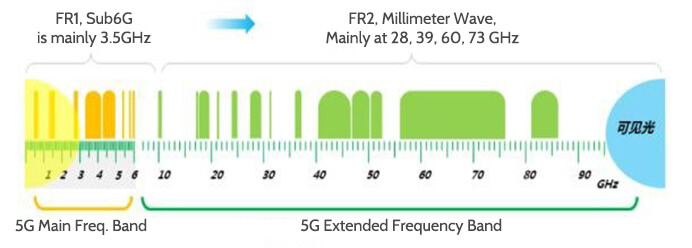 Figure 1: 5G NR Frequency Bands - FR1 (Sub-6GHz) vs FR2 (mmWave) Spectrum Allocation |
Therefore, a 5G antenna might be:
| • Ceiling omnidirectional antenna for indoor uniform coverage, | • Directional panel antenna for corridor/targeted area coverage, |
| • Multi-port antenna for 4×4 MIMO terminals, | • Or components in macro base station architecture (different technical concerns). |
Labels belong to marketing. Your system requirements are the core specifications.
What to Gather First |
A) Terminology DefinitionsFR1: 410 MHz to 7125 MHz FR2: 24.25 GHz to 52.6 GHz (FR2-1), up to 71 GHz (FR2-2) |
| • Frequency coverage proof: VSWR/return loss curve plots covering required bands (not single-point values) |
| • Radiation characteristics: 2D/3D radiation patterns (or at least azimuth/elevation slice plots) |
| • Multi-port evidence (if MIMO): Port identification + inter-port isolation data (ECC/correlation if available) |
| • Test method summary: Measurement approach/location (fixture, ground plane assumptions, test conditions) |
| • Installation location photos + orientation + surrounding metal/ground plane |
| • Cable type + length + adapter count for each RF path |
| • Device screenshots/logs (port mapping + signal metrics, before/after installation) |
| • Quick A/B swap results (ports/cables) |
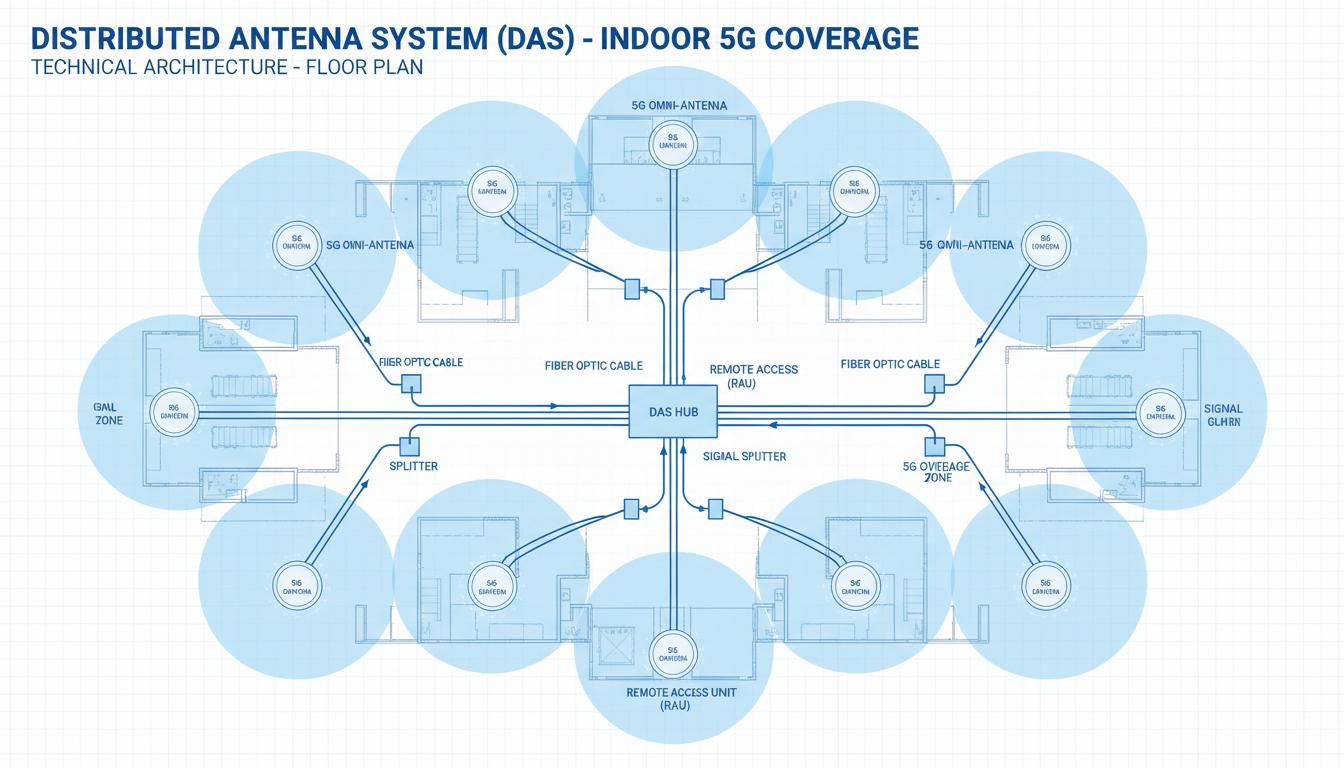 Figure 2: Distributed Antenna System (DAS) Architecture for Indoor 5G Coverage |
Five-Step Selection Process |
START → 1) Application Scenario? (Terminal / DAS / Small Cell / Macro Category) |
Step 1 — Confirm FR1 & FR2 RequirementsYour goal is not "buying 5G" but: matching the configuration your radio actually uses. Confirm These 3 Parameters from Modem/Radio Documentation |
| 1. Required operating bands (list specific bands, not just "5G") |
| 2. Bandwidth and channel planning (what the device actually uses) |
| 3. MIMO capability and port behavior (2×2 or 4×4 config, how ports are used) |
| • Operating frequency range and test proof |
| • VSWR/return loss curves across full band (not single numbers) |
| • Radiation pattern description/plots |
If bands are unclear, procurement risk is high. If bands are clear, selection becomes much easier.
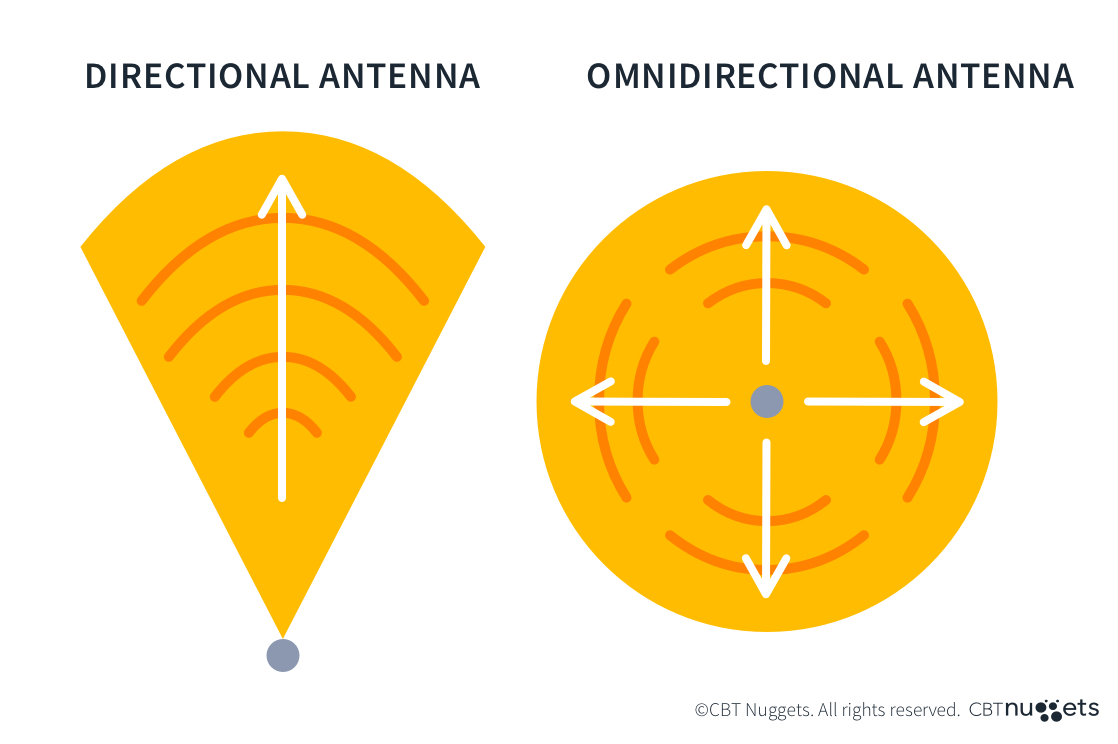 Figure 3: Radiation Pattern Comparison - Directional vs Omnidirectional Antennas |
Step 2 — Select by Deployment ScenarioThis is the fastest way to eliminate mismatched procurement. A) Macro Base Station / Macro CellMacro deployments are driven by system requirements (sector planning, mechanical stability, site constraints). Common mistake: Treating macro antennas as generic "5G Antennas." B) Small CellSmall cells are constrained by size, mounting method, and local coverage targets. Common mistake: Blindly pursuing highest gain without considering beamwidth and alignment sensitivity. C) Indoor DAS / iDASIndoor systems focus on uniform coverage and system balance: |
| • Node layout, |
| • Splitter/tap/combiner loss budget, |
| • Avoiding hotspots and dead zones. |
Common mistake: Choosing "higher gain" antennas instead of adjusting distribution balance.
Terminal antennas are constrained by real-world environments:
| • Enclosure effects + ground plane, |
| • Cable routing + connector standards, |
| • Vibration/sealing/temperature, |
| • Multi-port stability after installation. |
Common mistake: Equating bench test performance with installed performance.
Scenario → Common Form Factors | ||
| Scenario | Common Form Factors (Examples) | Application Focus |
|---|---|---|
| Macro Cell | Sector/Array Systems | Coverage planning + mechanical stability |
| Small Cell | Panel/Compact Directional | Directional coverage + mounting constraints |
| DAS/iDAS | Ceiling Omni, Wall Panel | Indoor uniform distribution |
| Terminal (CPE/Router) | Multi-port external, chassis mount, magnetic/screw mount | Mechanical constraints + MIMO ports |
This is a classification reference—not a recommendation list.
Step 3 — Omnidirectional vs Directional AntennasChoose Omnidirectional When: |
| • Users/devices are located around the antenna |
| • Mobility is expected, |
| • Direction is uncertain, |
| • The team cannot strictly control alignment direction. |
Omnidirectional antennas are typically chosen for signal coverage consistency, not maximum coverage range.
| • Coverage needs to focus on a known area, |
| • Interference from other directions needs to be blocked, |
| • Alignment can be maintained after installation. |
Practical Rule: If you cannot reliably align and maintain pointing direction, directional antennas carry higher risk.
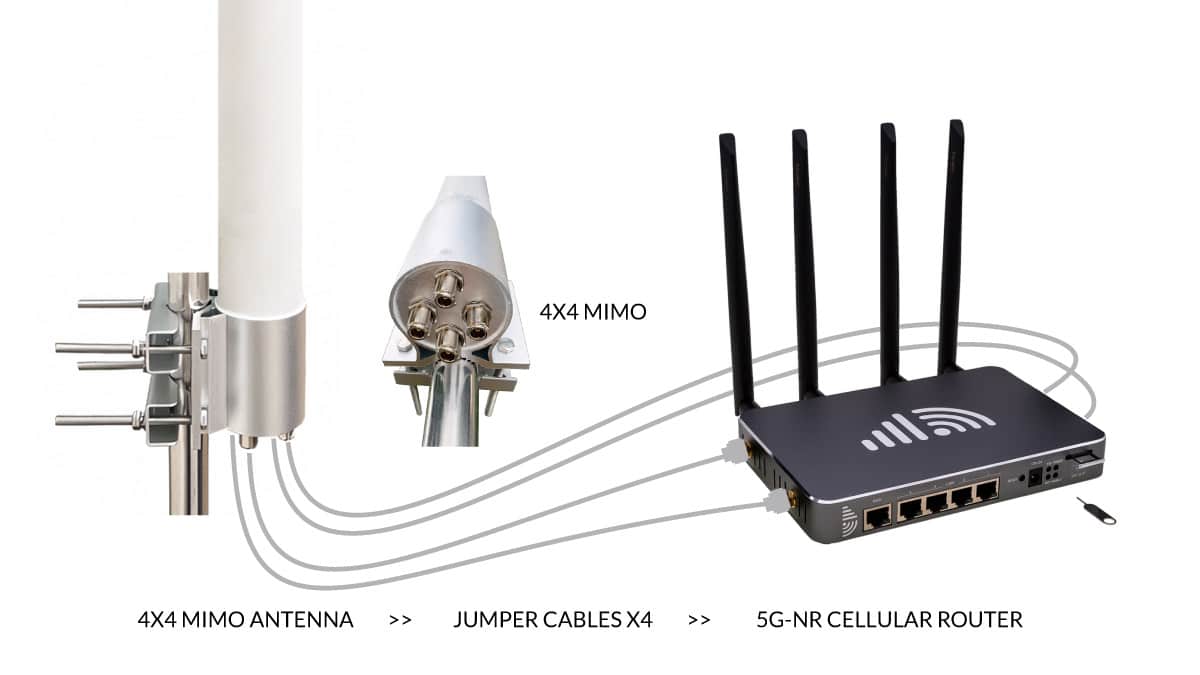 Figure 4: 4×4 MIMO 5G Antenna Connected to Cellular Router with Jumper Cables |
Step 4 — 2×2 vs 4×4 MIMOMIMO is not an "extra feature"—it often determines throughput and stability. First Confirm |
| • Does the device need 2×2 or 4×4? |
| • How are ports mapped (primary/secondary ports, ports 1-4)? |
| • Are ports cross-polarized or spatially separated (as expected by device design)? |
| • Port count + clear identification |
| • Inter-port isolation in relevant bands |
| • ECC/correlation (if applicable) |
| • Installation guidelines affecting RF (ground plane, spacing, mounting) |
| 1. Port Mapping Check — Confirm port-to-device mapping matches and device reports expected antenna paths. |
| 2. Cable Consistency Check — Use same cable type, keep similar lengths when necessary; avoid uneven adapter stacking. |
| 3. Post-Installation Functionality Check — Compare port metrics after installation; investigate asymmetry suggesting misalignment. |
| 4. Swap Test — Swap ports/cables to determine if issue stems from transmission path or antenna. |
Composite Case Study (Anonymized): 4×4 Antenna Array "Good" on Bench, Unstable in Vehicle Environment After roof mounting, ports 3/4 stability degraded and behaved randomly. Root cause was not antenna design flaw but installation-specific misalignment (ground plane + routing + unbalanced transitions). Swap tests confirmed the issue was in the installation path. |
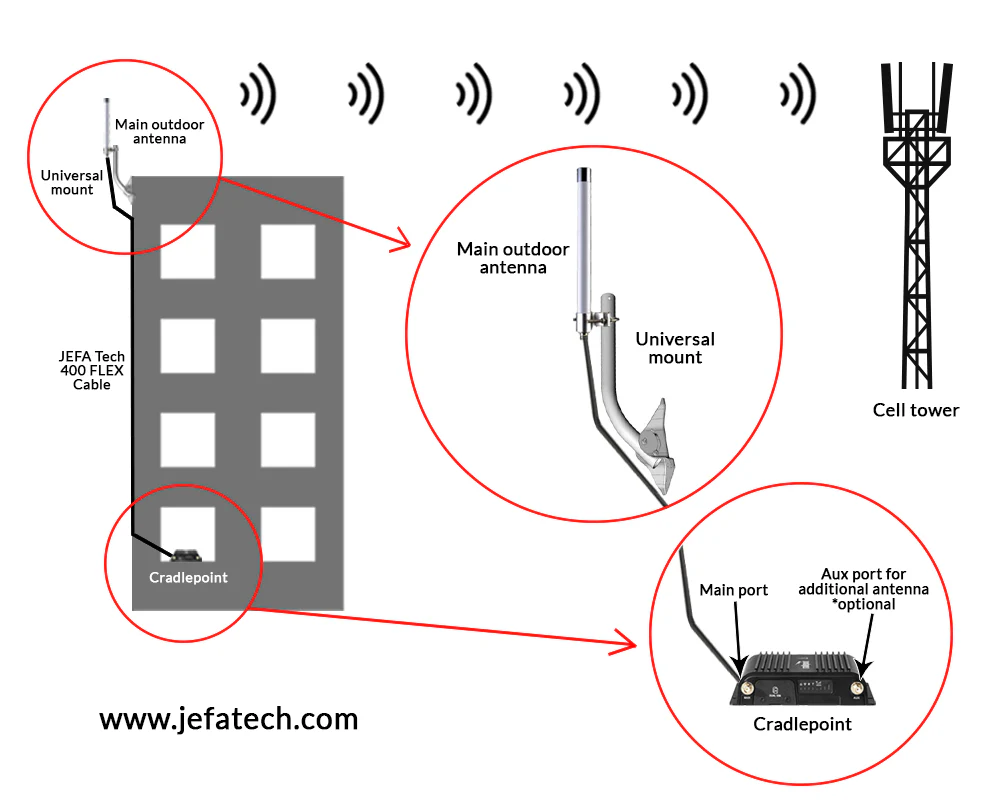 Figure 5: 5G External Antenna Cable Assembly - From Cell Tower to CPE/Router |
Step 5 — Cable Loss & Feedline PlanningMany "antenna problems" are actually feedline problems: |
| • Cable attenuation increases with frequency (and length), |
| • Connectors/adapters add insertion loss and mismatch loss, |
| • Routing mistakes cause stress/water ingress/bend issues. |
| • Keep cable lengths as short as possible. |
| • Minimize use of converters and transitions. |
| • Select connectors suited to the environment (including sealing). |
| • Document routing plans early (bend radius, strain relief, water ingress paths). |
| • Verify after full system assembly (not just bench testing). |
Integrated Field Case (Anonymized): "High Gain" Didn't Help—Feedline Ate the Gain A team selected high-gain antennas for outdoor CPE but used long coaxial runs with multiple adapters. Gain improvement was minimal, stability actually worsened. |
Convert Real Inputs to Procurement Specifications | ||
| Required Input | How to Convert to Requirement Spec | Typical Output Decision |
|---|---|---|
| NR bands used by radio | List specific bands; request curve plots for these bands | FR category, frequency range, evidence type |
| Scenario & installation | Location/material/orientation constraints | Form factor, mounting, sealing requirements |
| Coverage targets | Target area + alignment control | Omni vs directional, beamwidth sensitivity |
| MIMO requirements | 2×2 or 4×4 array + mapping + isolation verification | Port count, identification, cable symmetry rules |
| Cable plan | Cable type/length targets + max adapters + loss estimate | Feedline risk, connector specs, install instructions |
Test Plan Example1) Real Installation (No Shortcuts) |
| • Install samples at actual installation locations. |
| • Use planned cable types and lengths. |
| • Use target connector/adapter combinations (don't simplify for testing). |
| • Verify port mapping and MIMO behavior. |
| • Run swap tests to isolate antenna, cable path, and device mapping effects. |
| • Signal metrics available from device (e.g., RSRP/RSRQ/SINR) |
| • UL/DL throughput measured with consistent method |
| • Drop/reconnect count within defined time window |
| • Direction sensitivity and routing sensitivity notes |
PASS: Performance is stable and repeatable; MIMO paths perform consistently in actual installation. FAIL/RETEST: Significant asymmetry, instability after minor mechanical adjustments, or "fixes" that only work on the test bench. |
Common Field Failures |
| • Band mismatch: Labeled "5G" but doesn't cover required bands. |
| • Directional alignment failure: Directional antenna used but alignment cannot be maintained. |
| • MIMO path imbalance: Extra adapters or long cable on one path. |
| • Enclosure detuning: Bench test normal, performance degrades in actual enclosure/ground plane environment. |
| • Feedline loss ignored: Long runs + multiple joints cause performance degradation. |
| • Poor sealing/routing: Outdoor/vehicle installations fail due to water ingress or stress. |
Short sample verification usually catches these issues early at low cost.
FAQ |
Q: Best 5G antenna choice for routers (CPE)? "Best" depends on NR bands, MIMO requirements, installation constraints, and feedline losses. First confirm bands and 2×2/4×4 configuration, then choose omnidirectional or directional based on whether alignment can be controlled. |
Q: What's the acceptable coaxial loss limit for Sub-6GHz 5G? No universal standard—depends on link budget and device margin. Practical rule: if feedline loss is too high, shorten cable runs, reduce adapter count, or upgrade cable rather than trying to recover with antenna gain. |
Q: Omnidirectional vs directional for fixed wireless? Directional antennas are usually better when service direction is clear and alignment can be maintained. If direction is uncertain or alignment requirements are low, omnidirectional is safer. |
Q: N-type vs SMA: What's the key difference? Focus on frequency rating, environmental sealing, and vibration resistance. Actual performance depends on connector series and assembly quality—never judge specs by connector name alone. |
References |
https://www.3gpp.org/technologies/nr-redcap-glimpse |
SummaryFor reliable 5G antenna procurement, treat the process as a system engineering workflow rather than a label-based purchase: |
| • Confirm the exact NR bands and FR category used by the target device before selecting any antenna. |
| • Select by deployment scenario first (terminal, DAS/iDAS, small cell, macro category), then by form factor. |
| • Choose omnidirectional or directional antennas based on whether alignment can be controlled in real use. |
| • For MIMO systems, verify port mapping, isolation behavior, and cable symmetry after installation, not only on a bench. |
| • Include feedline planning (cable type/length, adapter count, routing and sealing) in the RF budget from day one. |
| • Require supplier evidence: band coverage curves, radiation plots, and multi-port data matched to your requirements. |
| • Run real-location sample validation with the final cable plan and approve bulk procurement only after repeatable pass results. |
| Bottom line: success comes from matching bands, scenario, pattern, MIMO behavior, and feedline reality as one complete system. |
— Taylor
Found this guide helpful? Share it: |
About the Author Taylor Yang is an RF engineering specialist with extensive experience in 5G antenna systems, distributed coverage solutions, and wireless communication infrastructure design. | |
Technical Blog |
Contact: Diana Xie
Phone: 86-15815571536
E-mail: sales@global-antenna.com
Whatsapp:8615815571536
Add: Room826, Floor 8,BLDG 13, University Science Park(East), Zhengzhou City, P.R.Henan, China.Zip Code: 450000